
Giant manta rays cross borders in Central America
Read in English
Machine translation
 Machine translation
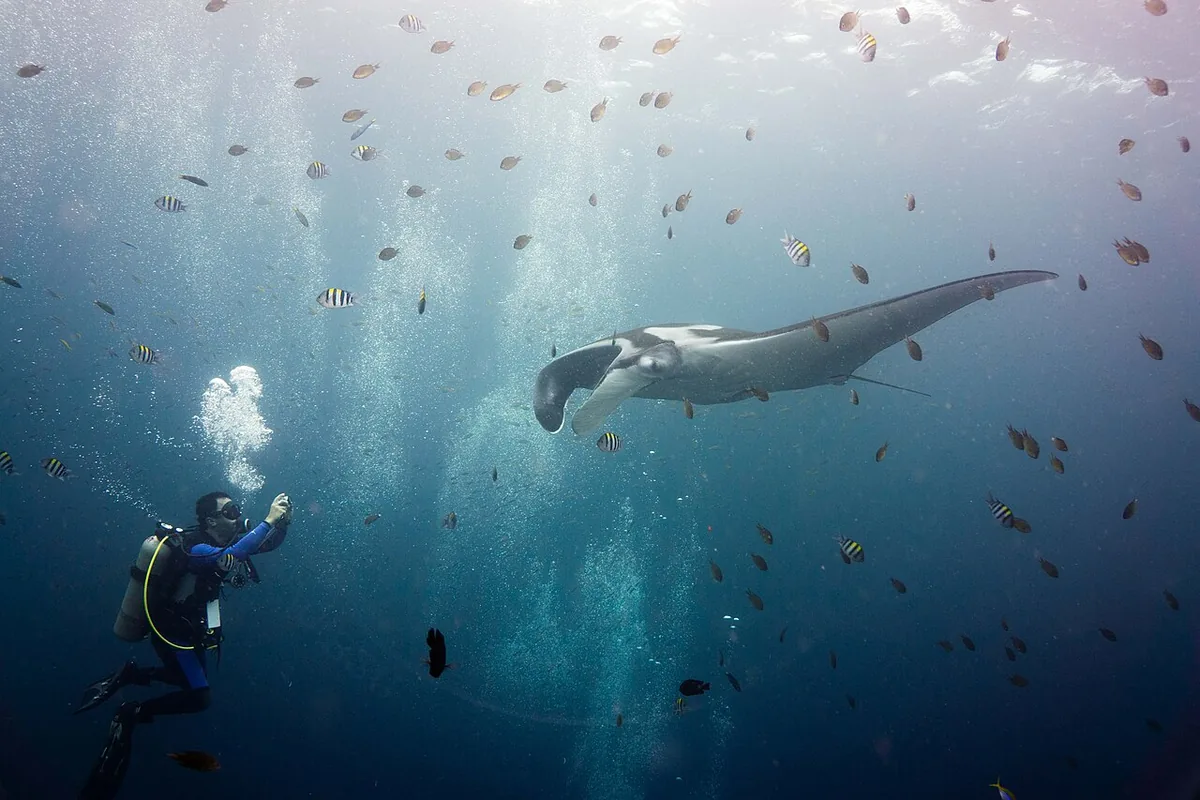
A study tracks the journeys of several giant manta rays and finds that they swim from one country to another. Its authors want them to be protected along all their routes.
A scientific study published in October 2026 offers the first basic map of the journeys of giant manta rays around Central America. The researchers fitted satellite transmitters to 12 of these animals in the waters of Costa Rica. Thanks to the signals, they found out where the rays swam.
Of the 12 manta rays, 9 left the waters of Costa Rica and reached those of Nicaragua, El Salvador, Honduras and Guatemala, or the open sea. Between them they covered 21,815 kilometres. It used to be thought that they travelled south, towards Ecuador, but the ones that were tracked went north.
Also, two young individuals stayed near the coast of Costa Rica. The authors think those waters may serve as a nursery, that is, a place to grow up safely. In the shallow waters there is food and less danger from large sharks and killer whales. Also, near the coast there are cleaning stations, where small fish remove parasites and dead skin from the manta rays.
An adult giant manta ray can grow to about 7 metres across and weigh up to 2 tonnes. Each one has a pattern of spots on its belly that sets it apart, like a fingerprint, and that is how they are recognised in photos. One of the adults was nicknamed "Mickey Mouse" because the black spots on its belly remind people of the famous mouse.
The giant manta ray is in danger of extinction, and boats and nets are a danger to it. In the open sea, the routes it uses have no protected marine area, although on the coast there are sanctuaries.
That is why the authors propose creating "swimming corridors" that cross several countries, that is, protected routes along which manta rays can swim safely even when they cross borders.
Gus and Julie, on the way to school

Manta rays cross countries without a passport. And each one has spots on its belly like a shipping label. I love it!

If a manta ray could tell you about its journey, what would you ask it first?
Questions
Tap the answer you think is right.
How were the scientists able to follow the manta rays' journeys?
What do the small fish do at the cleaning stations?
What does each manta ray have on its belly that helps to recognise it?
What do the authors of the study propose?
Giant manta rays cross the borders of several countries. Why do you think it is important for countries to work together to protect animals that travel? Write two reasons.
One of the manta rays is called "Mickey Mouse" because of the spots on its belly. If you could give a nickname to an animal you know, what would it be and why?
What has happened since then?
 What has happened since then?
Have the countries of Central America agreed to protect giant manta rays along all their routes?
Find out in the library, by asking someone or by searching with an adult. This story is from November 3, 2026: what have you discovered since that date?
 Print worksheet