
Almost a thousand children sing and act in 17 indigenous languages in the Zócalo in Mexico City
Read in English
Machine translation
 Machine translation
On Saturday 7 November 2026, children and young people from 28 states of Mexico filled the capital's main square with music, theatre and poetry in indigenous languages.
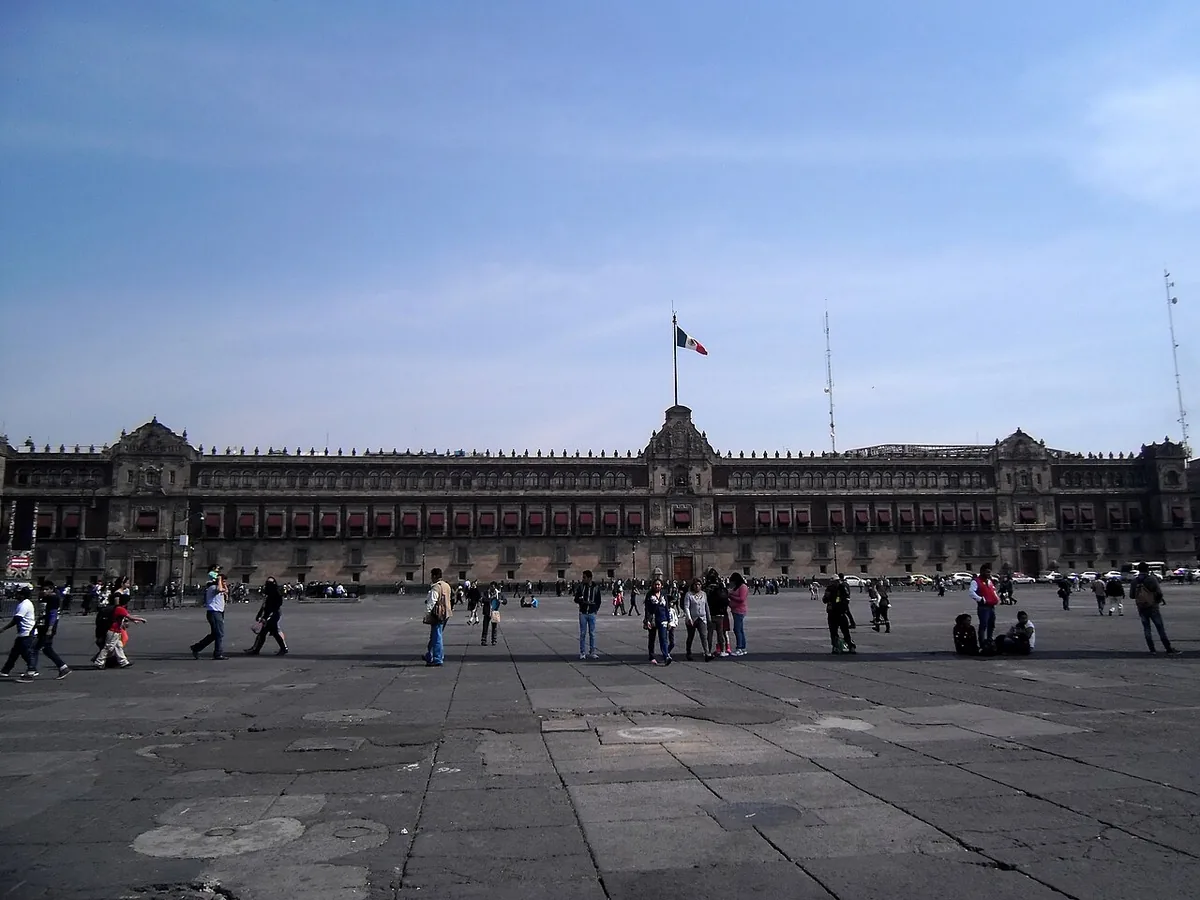
On Saturday 7 November 2026, almost a thousand children and young people from 28 states of Mexico gathered in the Zócalo in Mexico City. The Zócalo is the capital's great main square and it is next to the National Palace. There they held a festival called "Voces vivas, salvando al fuego" ("Living Voices, Saving the Fire"), which was being held for the second time. Entry was free.
They sang, danced, acted and recited poetry in 17 indigenous languages, including Nahuatl, Maya, Mixtec, Otomí, Purépecha, Tsotsil and Wixárika. Indigenous languages are the languages of the original peoples of Mexico.
The play tells a traditional tale shared by several indigenous peoples: that of the tlacuache, Mexico's opossum, which steals fire to give it to people. The monarch butterfly also appears, symbolising migration, transformation and life in a community.
The play was built from stories written by the children themselves. The poet Mardonio Carballo put them together in a script, and the stage director was Jesusa Rodríguez.
The participants came from children's choirs and from music, dance and theatre groups in 181 municipalities across the country. They prepared the show for six months in their communities and then spent two weeks together at a camp in Oaxtepec.
During the event, a video mapping, which is images projected onto a building, covered the National Palace. According to the organisers, the event celebrated the diversity of languages and cultures in Mexico, and put the protection of original languages and the participation of the new generations at the centre.
Gus and Julie, on the way to school

Almost a thousand children in 17 languages. I wrote down in my notebook the tlacuache that steals fire: what a brave delivery driver!

If you had to write a story for a play like this, which animal or thing would be the main character?
Questions
Tap the answer you think is right.
What is the play presented by the children about?
How was the play put together?
Where did the participants spend two weeks together before the event?
What does the monarch butterfly symbolise in the play?
In the play, the children used indigenous languages to tell stories. Why do you think it is important that the languages of peoples are not lost? Write two reasons.
If you could sing or act in your family's language, which story or song would you choose? Tell us and explain why.
What has happened since then?
 What has happened since then?
Has "Voces vivas, salvando al fuego" been held again? In how many languages did they sing?
Find out in the library, by asking someone or by searching with an adult. This story is from November 8, 2026: what have you discovered since that date?
 Print worksheet