Japan launches a probe to bring back a sample from Phobos, a moon of Mars
Read in English
Machine translation
 Machine translation
Japan has launched the MMX probe towards Phobos, a moon of Mars. It wants to bring back to Earth at least 10 grams of material from there, and it would be the first sample from a moon that is not our own.
On Tuesday 20 October 2026, at 4:41 in the early morning in Japan, an H3 rocket took off from the island of Tanegashima. It carried the MMX probe, which is travelling towards Mars. In Sweden and in Spain it was 21:41 on Monday the 19th. An hour and 11 minutes later, the probe separated from the rocket and was on its planned path. In the mission control room they clapped and hugged.
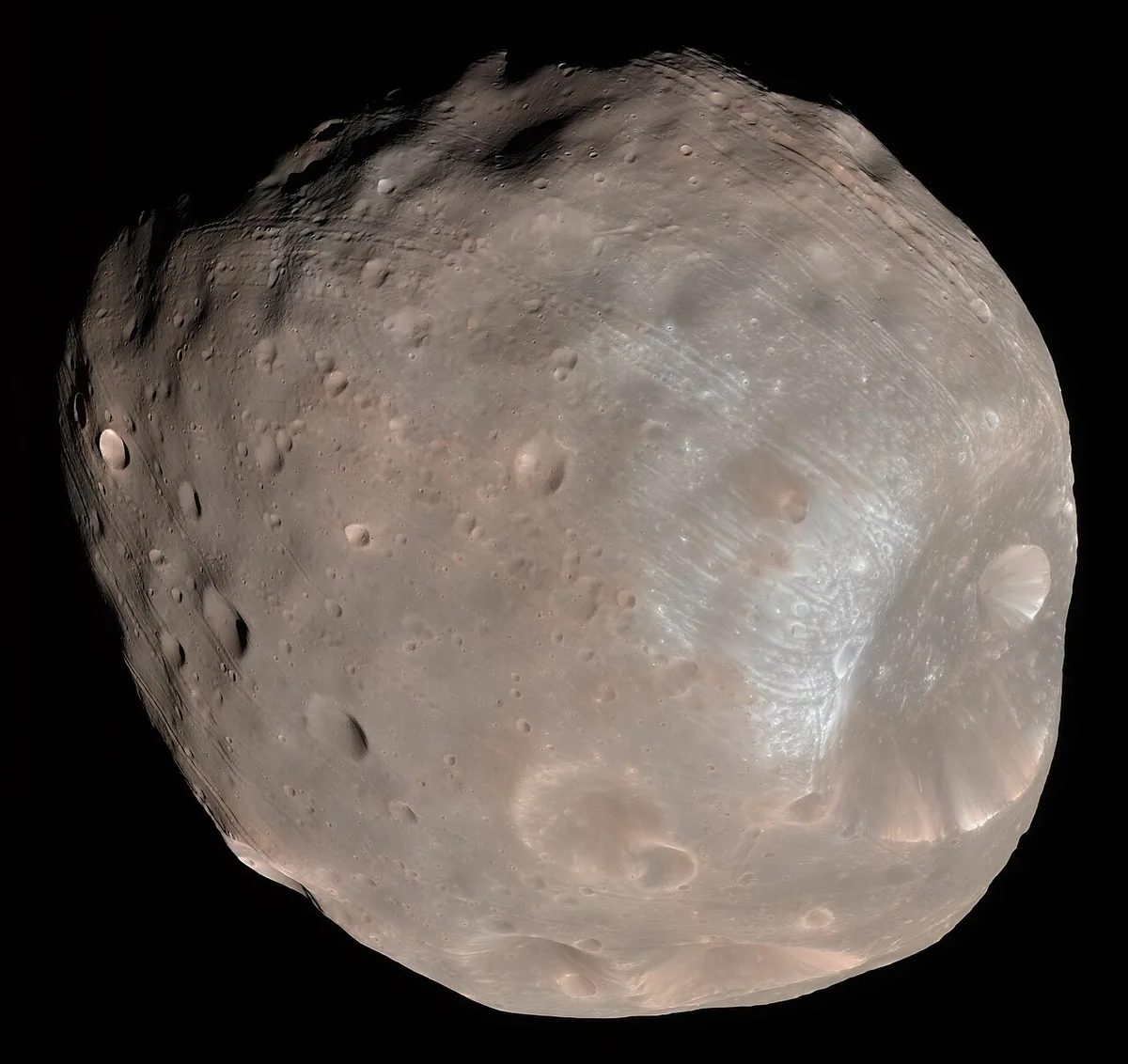
The initials MMX stand for ‘Martian Moons eXploration’. The probe is going to Phobos, one of the two moons of that planet; the other is Deimos. Phobos is shaped like a potato and is about 22 kilometres wide, according to the AP news agency. Nobody has ever landed there, and scientists do not know how these moons were formed.
The mission wants to bring back to Earth at least 10 grams of material from Phobos. It is very little, but it would be the first sample from a moon that is not our own. Five space agencies are collaborating: JAXA, from Japan, which leads the mission, NASA, from the United States, and those of France, Germany and Europe.
The probe will reach Mars in August 2027 and from September of that year it will orbit Phobos. In a few years' time, a module with four legs will land there and collect the sample with a drill. The capsule with the material will return to Earth in 2031, as planned, and will land in the desert in Australia.
The probe also carries a small rover, a robot with wheels, made by France and Germany. It is called Idefix, like the dog in the Asterix comics. It is the size of a microwave and weighs 25 kilograms on Earth, but on Phobos, where gravity is very weak, it would weigh only about 15 grams.
Spain is taking part too. According to the CSIC, the Centre for Astrobiology and the INTA have provided the laser for an instrument on the rover called RAX. That laser weighs less than 100 grams, like a matchbox, and will be used to identify minerals.
Gus and Julie, on the way to school

The robot is called Idefix, like a comic-book dog, and on Phobos it would weigh next to nothing. I want a robot with a dog's name!

They will bring back only 10 grams from Phobos. What do you think scientists could learn from such a tiny bit of material?
Questions
Tap the answer you think is right.
What does the MMX mission want to bring back to Earth?
What is the small rover carried by the probe called?
When is the capsule with the sample planned to return to Earth?
What has Spain provided for the rover, according to the CSIC?
Phobos is shaped like a potato and nobody has ever landed there. If you could ask the scientists of the mission a question, what would you ask them and why?
Five space agencies from different countries are collaborating on this mission. What can be achieved when several countries work together? Give an example, here in Sweden or in your family's country.
What has happened since then?
 What has happened since then?
Did the MMX probe reach Mars in 2027? When will it collect the sample from Phobos?
Find out in the library, by asking someone or by searching with an adult. This story is from October 20, 2026: what have you discovered since that date?
Sources
Educational adaptation of AP (publicado en Phys.org) · Oct 20, 2026
- NASA Science · NASA to Help Unlock Mysteries of Mars’ Moons in Upcoming Mission, Oct 15, 2026
- ESA · Mars moon lander set to launch on 19 October, octubre 2026
- Seoul Economic Daily · Japan Launches Mars Moon Probe in First Bid to Bring Back Samples, Oct 20, 2026
- DLR · Off to the moons of Mars: MMX mission and IDEFIX rover ready for launch, Sep 1, 2026
- JAXA · Launch result of the Martian Moons eXploration (MMX) spacecraft, Oct 20, 2026
- CSIC · España participa en la misión que traerá a la Tierra las primeras muestras de una luna de Marte, Oct 19, 2026
 Print worksheet