
A new frog that carries its young on its back is discovered in Peru
Read in English
Machine translation
 Machine translation
Scientists have described a new species of marsupial frog in the Alto Mayo Protection Forest, in Peru. The female protects her young in a pouch on her back until they are born as little frogs.
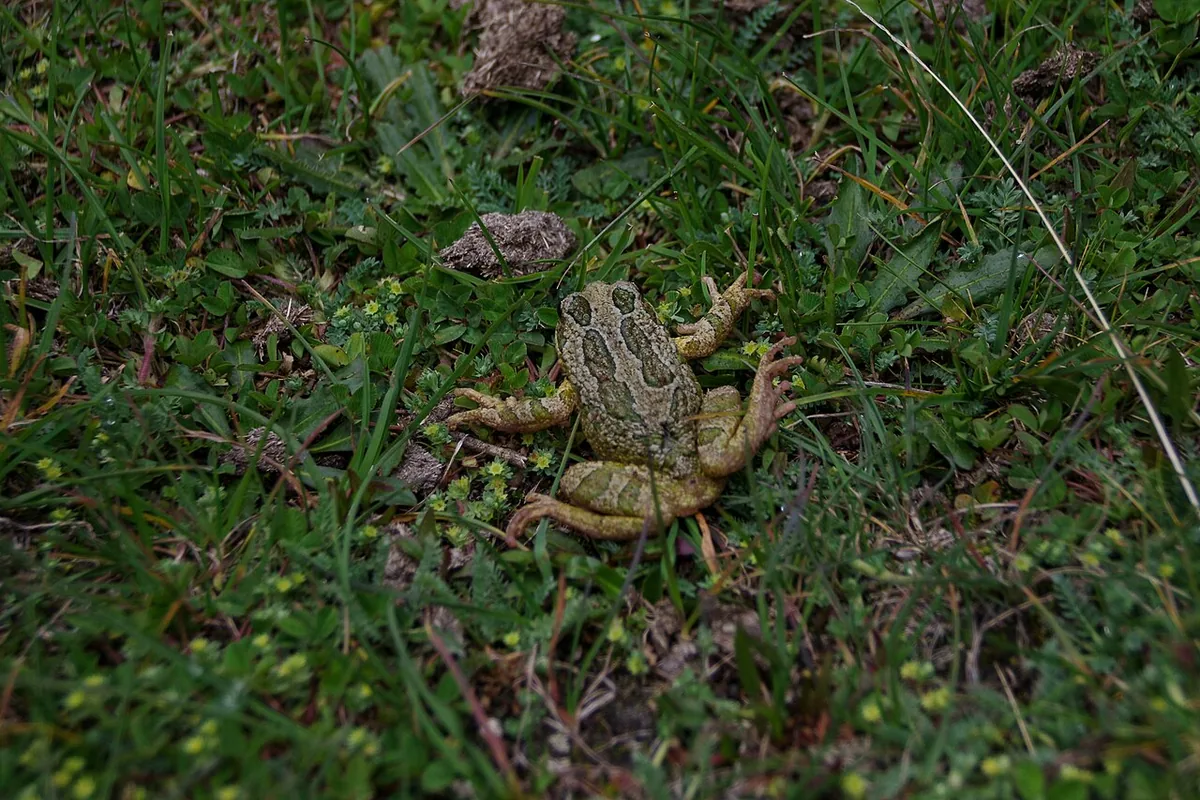
A group of scientists has described a frog species in Peru that is new to science. Its scientific name is Gastrotheca sanmartin, in tribute to the department of San Martín and its nature. It is a marsupial frog, which means that the female protects her young inside a pouch on her back.
The find happened during an expedition in 2014 in the Alto Mayo Protection Forest, a protected natural area in San Martín. Getting there was difficult because these are remote areas. The team had the help of park rangers and local people. The frog studied was an adult female found at an altitude of 3245 metres, on high ground with tall grasses called a wet pajonal.
The female was carrying already developed embryos in the pouch on her back. In this species, the young do not go through a tadpole stage swimming free in the water. Instead, they develop inside the mother's pouch and come out already formed as little frogs.
Confirming that it was a different species took more than ten years of work. The researchers from the National University of San Marcos (Universidad Nacional Mayor de San Marcos), in Lima, and the University of California analysed both the shape of the animal and its DNA. Finally, they published the study on 30 October 2026 in the scientific journal Salamandra.
One of the scientists on the project explained that there are still undescribed species in the Alto Mayo Protection Forest. He pointed out that there is still much to learn about the life that inhabits this natural region of Peru.
Gus and Julie, on the way to school

A frog that carries her young in a pouch on her back. Now that is careful delivery: not one of them gets dropped.

What advantages do you think it has for the young to grow inside their mother's pouch and not in the water?
Questions
Tap the answer you think is right.
Why is this frog called "marsupial"?
At what altitude did they find the adult female that was studied?
How do the young leave the pouch in this species?
When was the scientific study about this frog published?
Why do you think the park rangers and local people were so important for finding this frog in a remote area?
What interesting animals live in the forests or nature parks of Sweden or of your family's country?
What has happened since then?
 What has happened since then?
Have more new species been discovered in the Alto Mayo Protection Forest? Which ones?
Find out in the library, by asking someone or by searching with an adult. This story is from November 15, 2026: what have you discovered since that date?
 Print worksheet