A map shows where the crocodiles of the Tárcoles River have the most room
Read in English
Machine translation
 Machine translation
A student at the National University of Costa Rica made some maps of the Tárcoles River. They show that there is little very good space for crocodiles to build their nests and raise their young.
A student at the National University (UNA) of Costa Rica has made some maps to find out where the crocodiles of the Tárcoles River have the most room. Her name is Amanda Bogantes Barrelier and she made them for her thesis, the final piece of work of her studies. The results were presented to the press on Friday 16 October 2026.
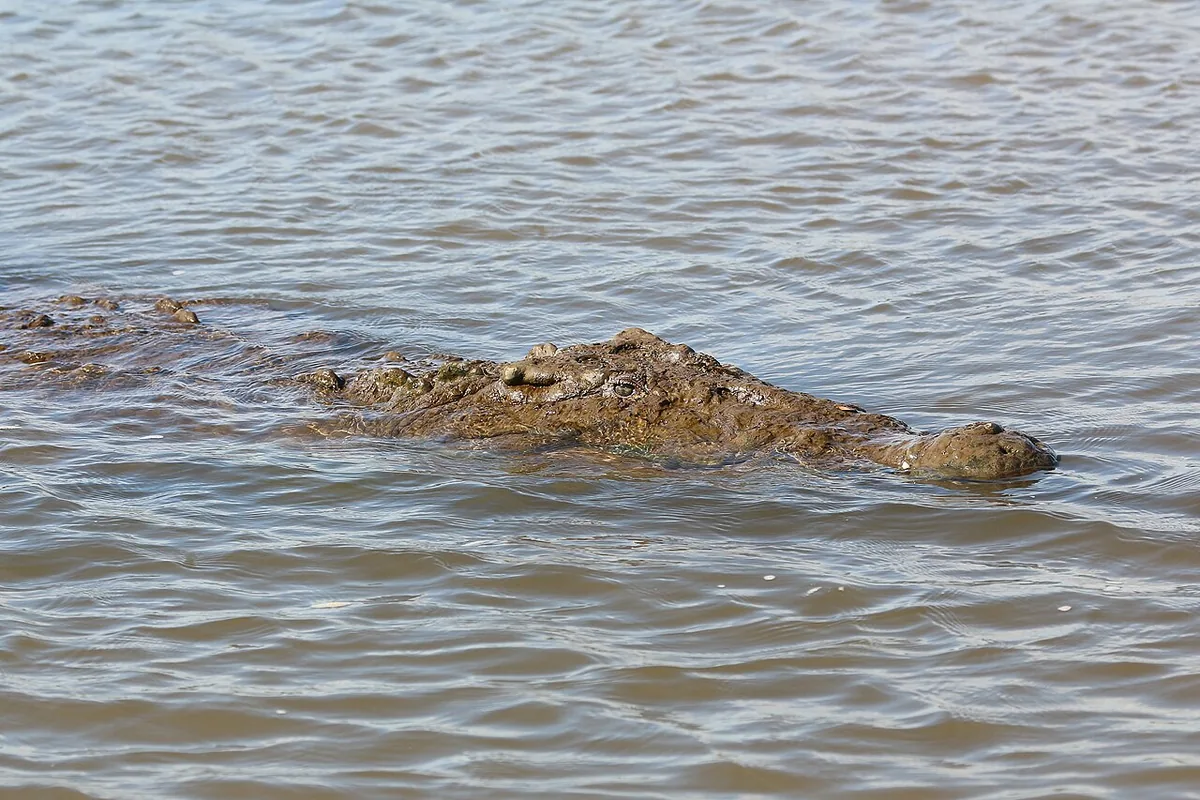
The Tárcoles is one of the best-known places in Costa Rica to see American crocodiles, from the bridge on Route 34, on the road from San José to the beaches of the central Pacific. The student analysed about 5.48 square kilometres of the lower stretch of the river, from several kilometres before the bridge to the Pacific Ocean.
To make the maps she used photos taken from the air and computer programs. She looked for the places where crocodiles could nest and raise their young. She took into account how the land is used, the distance to the river and how steep the ground is.
The result is that there is little very good space for them. 86.41% of the area studied is of medium or low quality for crocodiles. Only 12.52% is of high quality and barely 0.25% is of very high quality.
The best places for the ‘nurseries’, where the young live, are few and far apart from each other. They depend on small clumps of plants beside the river. Some are close to crops, houses, buildings and mining activity. Part of that habitat lies in the 50-metre strip beside rivers that the Forest Law protects, but even there human uses of the land were seen.
Amanda Bogantes explained that, if crocodiles lose places to nest and hide their young, their breeding and survival could be affected. The study did not count how many crocodiles there are, so it does not prove that they are in danger. The idea is that the maps will help to decide where to protect the habitat and how to avoid problems between people and crocodiles.
Gus and Julie, on the way to school

Amanda made maps to see where the crocodiles have the most room. A fellow map-maker! I want to see that map right now.

Crocodiles need safe places for their young. What would a perfect nursery for them look like, in your imagination?
Questions
Tap the answer you think is right.
What did Amanda Bogantes Barrelier do?
What part of the area studied is of very high quality for crocodiles?
What did the student use to make the maps?
What does the text say about the number of crocodiles?
The maps will be used to decide where to protect the crocodiles' habitat. Why do you think it is important to protect the places where animals live and raise their young? Write two reasons.
Near the Tárcoles River there are houses, crops and also crocodiles. How can we live alongside the wild animals that live near us, in Sweden or in your family's country? Suggest two ideas.
What has happened since then?
 What has happened since then?
Have the places on the Tárcoles River that the map marked as the best for crocodiles already been protected?
Find out in the library, by asking someone or by searching with an adult. This story is from October 16, 2026: what have you discovered since that date?
 Print worksheet