A bird at the Amsterdam zoo gets a new 3D-printed beak
Read in English
Machine translation
 Machine translation
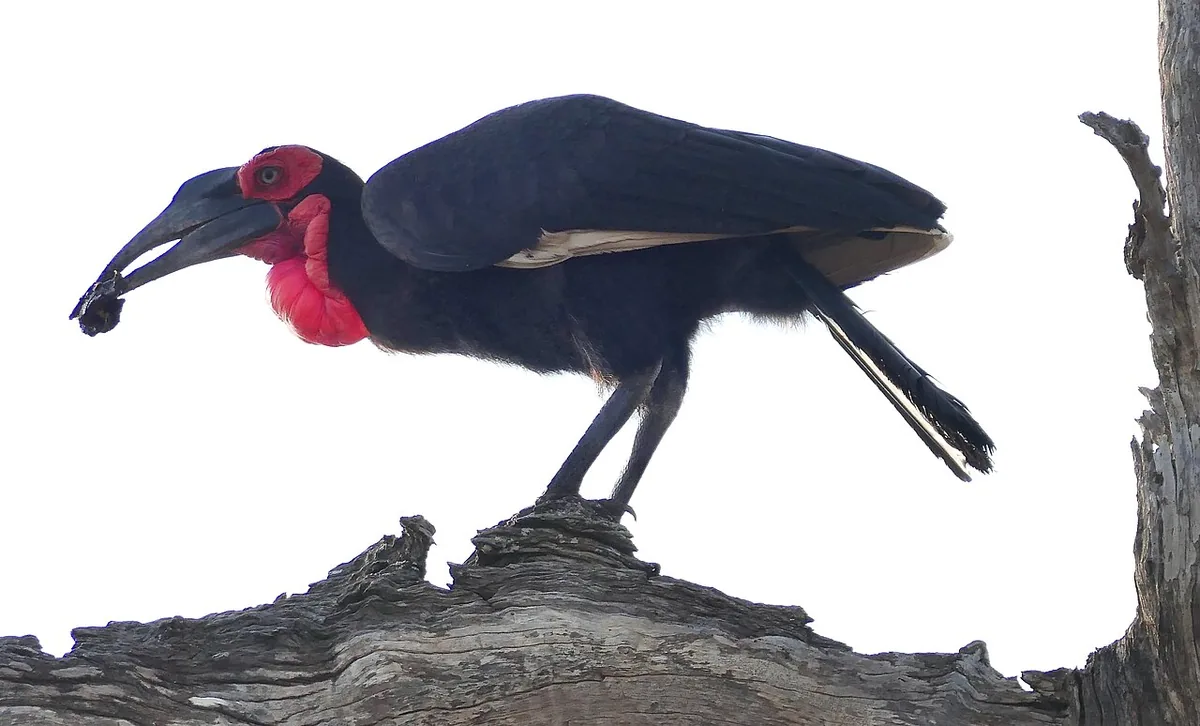
A southern ground hornbill at Artis zoo had broken her beak and could not pick up food from the ground. Now she has a new beak, made with a 3D printer, and is already back to her normal life.
A southern ground hornbill at Artis zoo, in Amsterdam, had broken both the top and the bottom part of her beak. This bird lives in the African savannah and eats insects, lizards and other small animals. With the two pieces broken, she could not pick up food from the ground or preen her feathers. She spent several months with just two short stumps instead of a beak.
According to the zoo, it is the first time in the world, as far as is known, that both halves of a bird's beak have been restored in this way. The operation was teamwork by Artis, Utrecht University, the university hospital UMC Utrecht and the company Amnovis.
A specialist at the hospital designed the two new parts from a scan of the bird and from the pieces of the original beak that had been kept. Then the parts were 3D-printed. A 3D printer makes objects little by little, layer upon layer, from a design made on the computer.
Two vets from Utrecht University fitted the two prostheses in a single operation. A prosthesis is a part that replaces a part of the body. The bird began to use the new beak on the very day of the operation.
The next morning she picked up a little mouse from the ground, which is her normal food, and a few days later she was already preening her feathers. Now she also picks up insects and, according to one of her keepers, she preens the feathers of her mate and her daughter.
The scientists will keep checking that the prostheses hold up well in the long term. The zoo reminds us that, for a bird, the beak is essential: if it loses a part, it loses much more than its looks.
Gus and Julie, on the way to school
With her new beak she already preens the feathers of her mate and her daughter. How happy she must be, and me too!
If you had a 3D printer, what would you invent to help an animal or a person?
Questions
Tap the answer you think is right.
What problem did the bird at Artis zoo have?
How were the two new parts made?
When did the bird start to use the new beak?
What did the bird pick up from the ground the next morning?
In this story a zoo, a university, a hospital and a company worked together. Which do you think is more important: 3D technology, teamwork or caring for the bird? Explain your choice with two reasons.
A 3D printer helped this hornbill. In what other cases do you think it could help people or animals? Think of an example, here in Sweden or in your family's country.
What has happened since then?
 What has happened since then?
Is the Artis hornbill still using her 3D-printed beak? Have they helped other birds in the same way?
Find out in the library, by asking someone or by searching with an adult. This story is from October 16, 2026: what have you discovered since that date?
 Print worksheet