Students from all over Costa Rica will present their science projects at a national fair
Read in English
Machine translation
 Machine translation
Students from primary and secondary schools all over the country will show their research at the University of Costa Rica on Thursday 12 and Friday 13 November 2026.
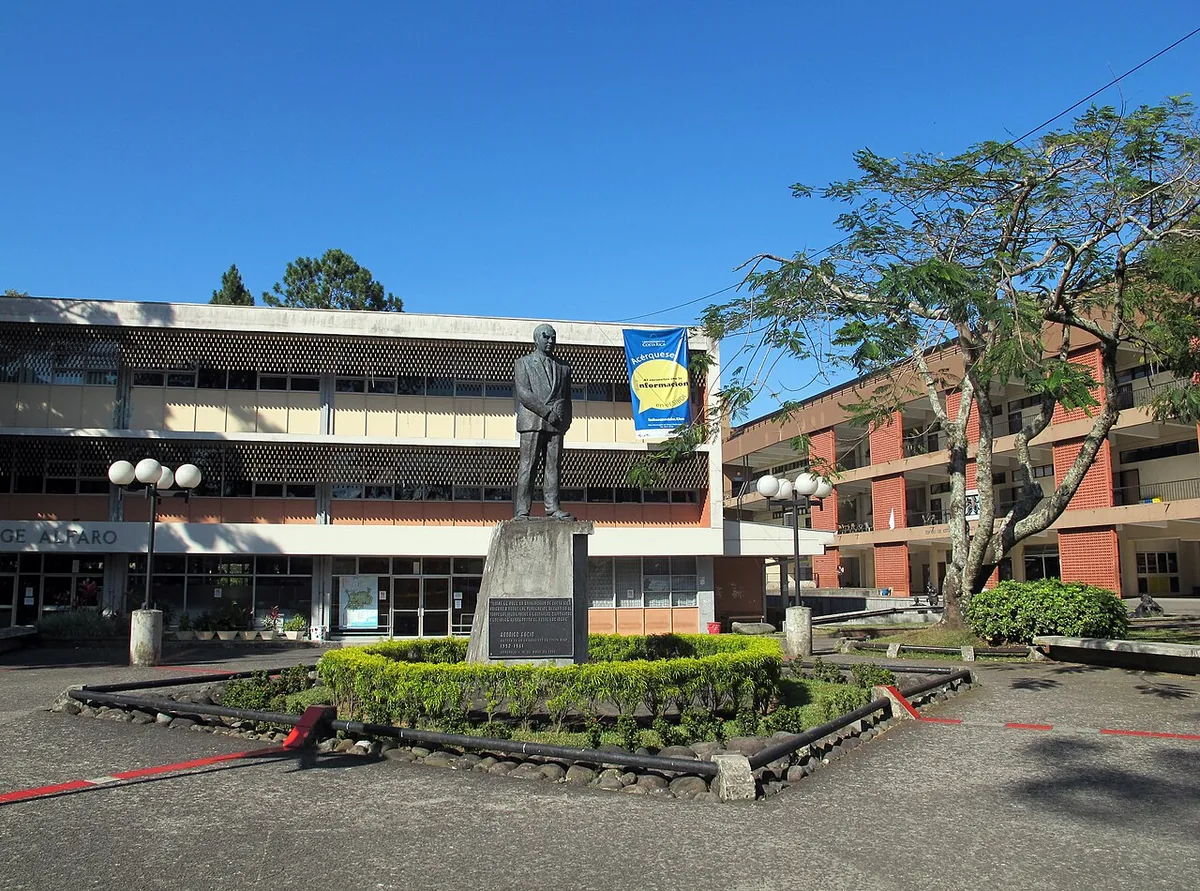
On Thursday 12 and Friday 13 November 2026, the National Science, Technology and Innovation Fair will be held in Costa Rica. It will be at the Rodrigo Facio campus of the University of Costa Rica, in San José, the capital of the country. There, 202 research projects made by more than 330 students will be presented.
The projects will come from the 27 education regions of the country. They came out of a process with about 30,000 participants. That process begins in the school itself and goes through several stages until it reaches the national fair. Primary and secondary school students will take part, as well as students from Indigenous education and special education.
The topics are very varied: biology, environmental science, Earth and space science, robotics, computing, physics, mathematics, engineering, chemistry, health and social sciences. The students have the support of tutor teachers, and a jury will judge the work.
On Thursday 12 November, until midday, the exhibition will be open to the public. Groups of students from other schools will also be able to visit it. There will also be workshops on artificial intelligence, robotics, basic sciences and innovation. On Friday 13 November, in the university's Aula Magna, the prizes will be given out. The ceremony can be watched live online.
In 2026 the projects will be judged online, with four evaluations for each project: two of the written work and two of the presentation. The fair is organised by the university and a national programme made up of the Ministry of Education, the Ministry of Science and the five public universities.
According to the UCR, this fair has been opening up spaces for almost four decades so that students from all over the country can share their research. Its coordinator, Jeudy Cambronero, considers it ‘a key opportunity’ to awaken scientific and technological vocations. In 2026 a sponsor is also joining in: Banco Popular.
Gus and Julie, on the way to school

I would bring my notebook to write down the 202 projects, although I think I would need spare pencils.

If you presented a project at the fair, what would you want to research and why?
Questions
Tap the answer you think is right.
From how many education regions of the country will the projects come?
What will happen at the fair on Friday 13 November?
How will the projects be judged in 2026?
What will the workshops at the fair be about?
At the fair there will be projects on biology, robotics, computing and many other areas. If you had to present a project, what topic would it be on and why? Tell us your idea with two reasons.
To reach the national fair, the projects went through several stages that begin in the school itself. Would you like to take part in a science fair at your school, in Sweden or in your family's country? Explain why or why not.
What has happened since then?
 What has happened since then?
Which projects won at the 2026 National Science Fair in Costa Rica?
Find out in the library, by asking someone or by searching with an adult. This story is from November 3, 2026: what have you discovered since that date?
Sources
Educational adaptation of la Universidad de Costa Rica · Nov 3, 2026
 Print worksheet