A new amphibian from 66 million years ago appears among the fossils of Arén, in Huesca
Read in English
Machine translation
 Machine translation
An international team of scientists has described a new species of tiny amphibian that shot out its tongue like a chameleon. It lived about 66 million years ago, shortly before the extinction of the dinosaurs.
On Friday 6 November 2026, the discovery of a new species of amphibian that is now extinct was announced. An international team of scientists has named it Synorerpeton ribagorzana. It lived about 66 million years ago in the territory of the present-day Iberian Peninsula, shortly before an asteroid caused the extinction of the dinosaurs.
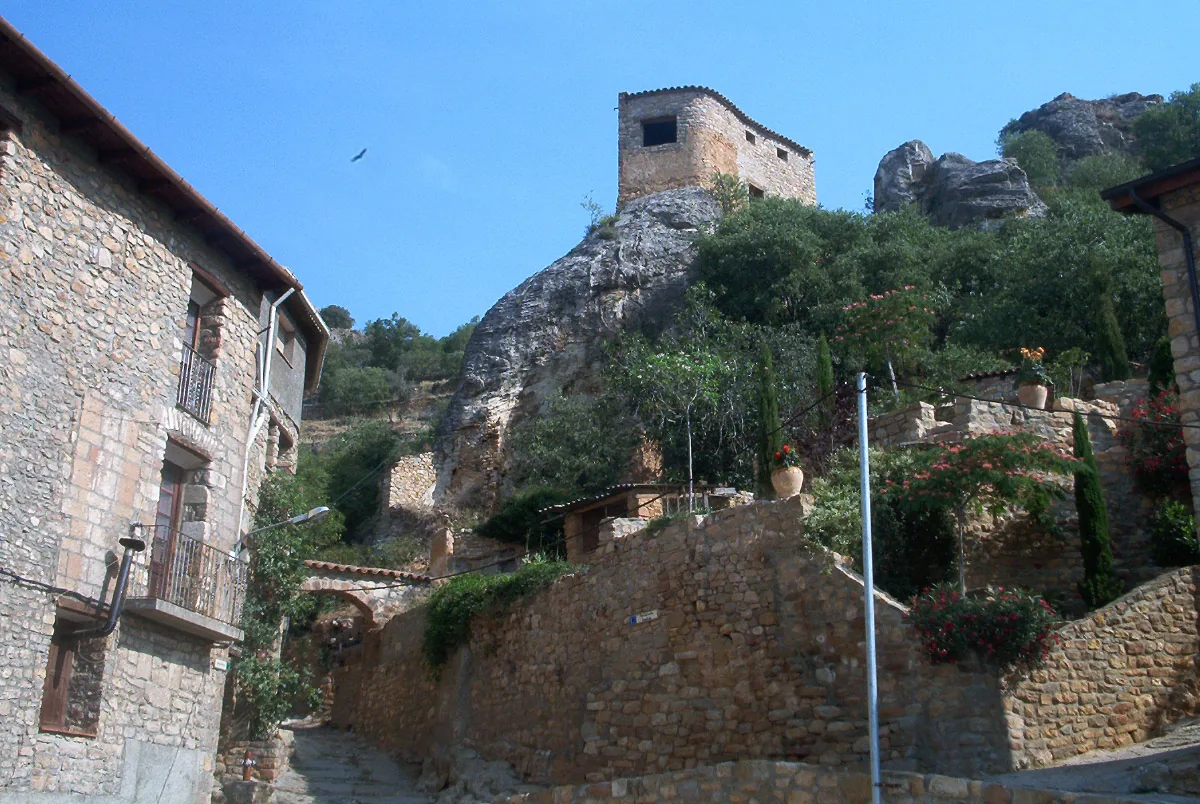
The fossils were found at the Blasi site, near Arén, in the Ribagorza region, in the province of Huesca. The scientists collected them in 1997 during an excavation campaign. They are more than 80 remains of tiny bones, such as pieces of skull and vertebrae.
Part of the material had already been studied before, but there was not enough proof to say that it belonged to a different species. The key was to look again at the fossils kept in the Natural Science Museum of the University of Zaragoza. The researcher Miguel Moreno-Azanza explained that they knew there were still ‘specimens that had not been described or identified’.
This species belongs to the albanerpetontids, a group of amphibians that are now extinct, which measured less than 5 centimetres and looked like small salamanders. They had dry, scaly skin, claws and eyelids. They could shoot out their tongues at great speed to hunt, in a way similar to that of today's chameleons.
The sediments with the fossils were laid down about 66 million years ago, roughly 500,000 years before the impact of the asteroid that ended the Cretaceous. That is why people say ‘shortly before’: in geological time, half a million years is very little. That closeness helps to study what Europe's ecosystems were like shortly before one of the biggest extinctions in history.
The name Synorerpeton comes from ancient Greek and can be translated as ‘the animal that crawls on the border’. It recalls that the site is near the boundary between two geological eras and near the border between Aragon and Catalonia. The second name, ribagorzana, recalls the Ribagorza region.
Gus and Julie, on the way to school

They collected the remains in 1997 and kept them in a museum until they found out they belonged to a new animal. What a late delivery!

If you could travel back 66 million years, what would you want to see first?
Questions
Tap the answer you think is right.
Which animal alive today is this amphibian's way of hunting compared with?
How long were the albanerpetontids?
In which year did the scientists collect the fossils?
Roughly how much time passed between the life of this amphibian and the impact of the asteroid?
This amphibian was less than 5 centimetres long and hunted with its tongue. Which animal alive today do you find most curious for the way it hunts or moves? Explain why.
The fossils waited in a museum until someone looked at them again. What objects kept in your home, your school or a museum do you think could teach us something new if we looked at them again?
What has happened since then?
 What has happened since then?
Have more fossils of Synorerpeton ribagorzana been found? Where?
Find out in the library, by asking someone or by searching with an adult. This story is from November 6, 2026: what have you discovered since that date?
 Print worksheet