The Chicamocha Canyon joins the third list of 100 sites of geological heritage in the world
Read in English
Machine translation
 Machine translation
A union of scientists from all over the world has included a canyon in Colombia in a list of very valuable places for learning about the history of the Earth.
On Friday 6 November 2026, the IUGS, the international union of scientists who study the Earth, announced its third list of 100 sites of geological heritage in the world. A site of geological heritage is a place that shows how our planet works. The Chicamocha Canyon, which is in the department of Santander, in Colombia, made it onto that list.
The announcement was made in Portugal, during a meeting attended by 156 experts from 49 countries. Among the famous sites on the list are Mount Fuji, in Japan, and Aconcagua, in Argentina.
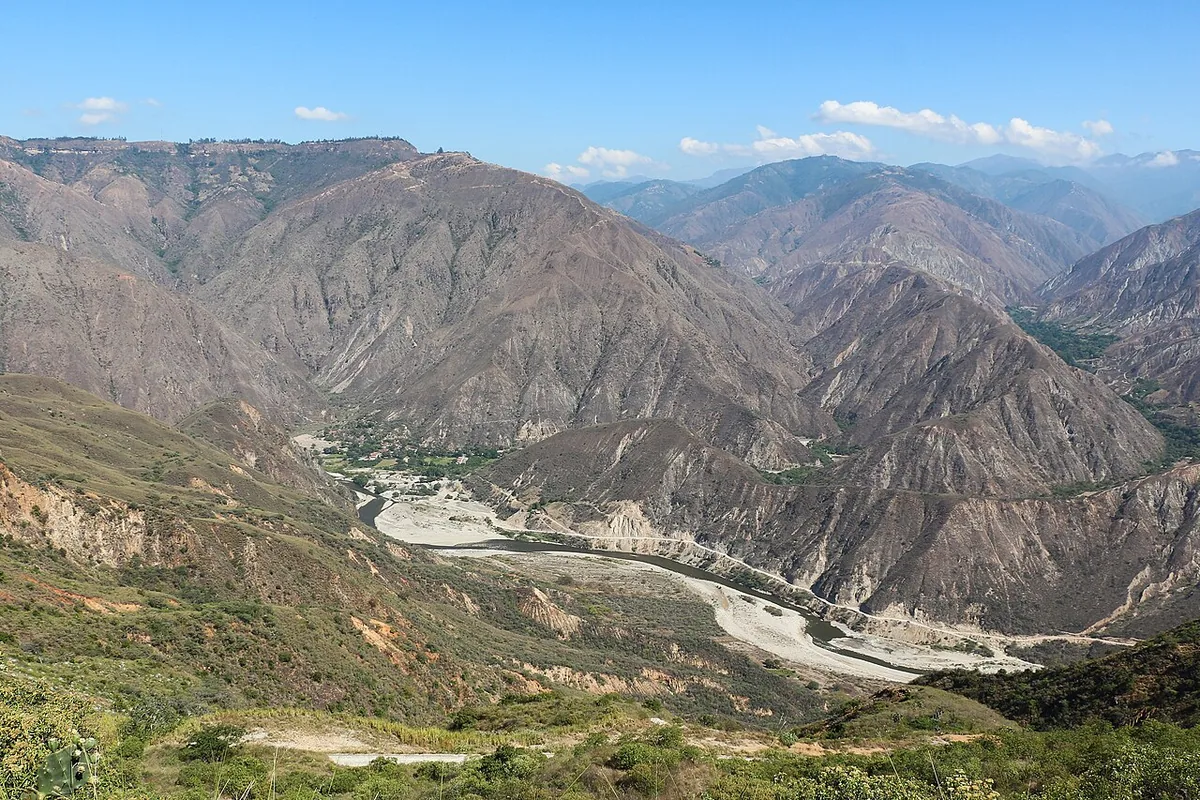
The Chicamocha Canyon is more than 200 kilometres long and reaches a depth of about 2,000 metres. It is in the Colombian Andes and covers 17 municipalities of Santander. The Chicamocha River runs through the canyon and, over millions of years, has helped to sculpt the landscape.
Its rocks and its relief hold more than 1,000 million years of the Earth's history. The scientists explain that its shape comes from the movement of the Earth's crust and from water erosion, which gradually wears the rocks away. The IUGS chooses places for their exceptional scientific value, and not just because they are beautiful.
The nomination was pushed forward by the Industrial University of Santander (UIS) and the Colombian Geological Survey, and it took almost four years of work. In 2024 a first attempt did not go ahead. The scientists corrected some technical details, and the 2026 proposal was approved. A UIS geologist travelled to Portugal to receive the recognition.
The canyon is also full of life. The press mentions, for example, a tree called the ceiba barrigona, a bird called the Chicamocha wren and the goats that wander along its slopes. The UIS professors ask that the people who live there get to know and take care of the beauty of the place.
Gus and Julie, on the way to school

A tree called the ceiba barrigona and a bird called the Chicamocha wren. With names like those, drawing a map of the canyon would be great fun for me!

Which natural place near you would you show to a visitor so that they understand what the Earth is like?
Questions
Tap the answer you think is right.
In which country was the list announced?
What has shaped the landscape of the canyon, according to the scientists?
What happened in 2024 with the canyon's nomination?
Why does the IUGS choose places like the Chicamocha Canyon?
The canyon holds more than 1,000 million years of the Earth's history. If you could visit a place in nature in Sweden or in your family's country to learn from it, which would you choose? Explain your reasons.
The nomination took almost four years and a first attempt did not go well. When have you kept at something until you managed it? Tell us what happened and what you learned.
What has happened since then?
 What has happened since then?
What changes has joining the IUGS geological heritage list brought to the Chicamocha Canyon?
Find out in the library, by asking someone or by searching with an adult. This story is from November 6, 2026: what have you discovered since that date?
Sources
Educational adaptation of El Espectador · Nov 6, 2026
- UIS Comunicaciones · El Cañón del Chicamocha entra al mapa del Patrimonio Geológico Mundial, Nov 6, 2026
- El Tiempo · El Cañón del Chicamocha fue reconocido como Patrimonio Geológico Mundial, Nov 6, 2026
- Vanguardia · El Cañón del Chicamocha es reconocido como uno de los 100 sitios geológicos más importantes del mundo, Nov 6, 2026
- Semana · Cañón del Chicamocha, la joya geológica de Colombia, Nov 6, 2026
- IUGS · The Third 100 IUGS Geological Heritage Sites have been announced, Nov 6, 2026
 Print worksheet