A right whale calf that nobody knew appears, and the 2025-2026 season now has 24 calves
Read in English
Machine translation
 Machine translation
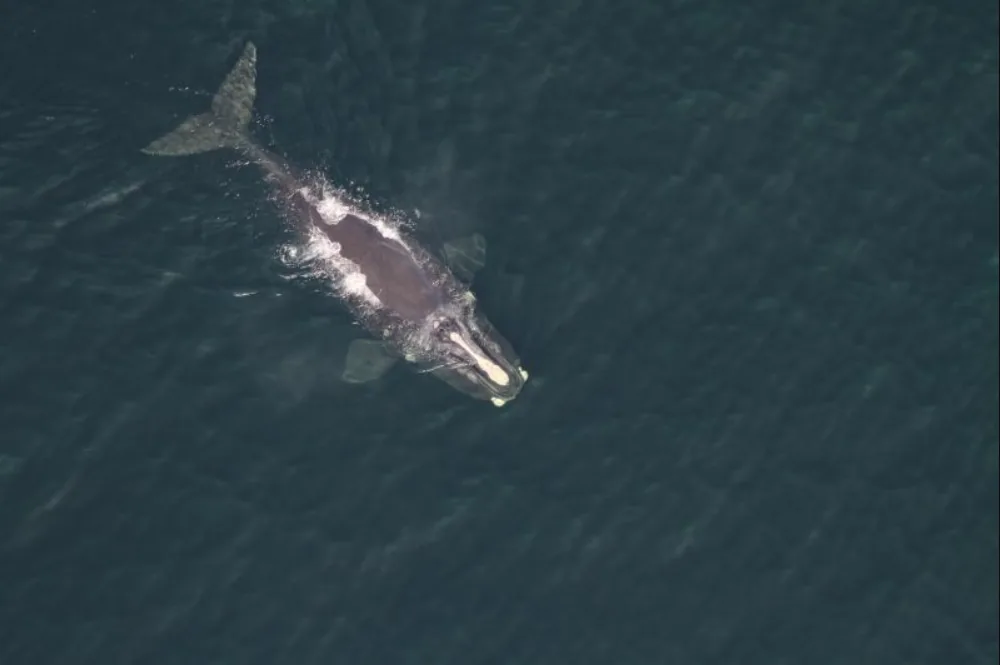
Researchers photographed a right whale with a calf that nobody knew near Anticosti Island, in Canada. With it, the season adds up to 24 calves, the highest number since 2009.
On Friday 25 September 2026, researchers photographed a North Atlantic right whale with her calf. It was near Anticosti Island, in Quebec, Canada. They sent the photos to the New England Aquarium, an aquarium in the United States. It keeps a catalogue of all the known right whales, and they saw that this calf was not in it.
The mother is called Silt and is whale number 1817 in the catalogue. She is at least 38 years old, and this is her sixth known calf. Silt is already a grandmother to three grandchildren, and in 2026 a great-grandchild of hers was born too.
The scientists think the calf was born months earlier, during the 2025-2026 season, and that it was missed in the winter surveys. They do not know the exact day or the place where it was born. Silt was seen briefly in February 2026 in the calving ground in the south-eastern United States. Perhaps she had her calf there and left before they were photographed together.
With this calf, the season adds up to 24 calves, the highest number since 2009. Before the discovery, 23 pairs of mother and calf had been counted. About 380 North Atlantic right whales are left in the whole world, and they are in critical danger of extinction. The scientists say the discovery is a reason to be happy.
Each whale is recognised from photographs, which the scientists compare with the catalogue. Richard Sears, founder of the group that took the photos, said this shows how big the ocean is and how these animals can get lost in it. The calving season usually starts in mid-November and lasts until mid-April.
Gus and Julie, on the way to school

Silt has six known calves, three grandchildren and a great-grandchild. To draw her family tree I would need a whole wall.

There are few right whales left. What do you think we could do to help them from where we live?
Questions
Tap the answer you think is right.
What did they check at the New England Aquarium when they looked at the photos?
How old is Silt, at the very least?
What do the scientists know about the calf's birth?
Roughly how many North Atlantic right whales are left in the world?
Right whales are in critical danger of extinction. What do you think can be done to look after sea animals? Write two ideas.
Each whale is recognised from photographs. Which animal from your country or from Sweden would you like to watch and photograph? Explain why.
What has happened since then?
 What has happened since then?
How many calves were counted in total in the 2025-2026 season? Has Silt's calf been seen again?
Find out in the library, by asking someone or by searching with an adult. This story is from November 7, 2026: what have you discovered since that date?
 Print worksheet